

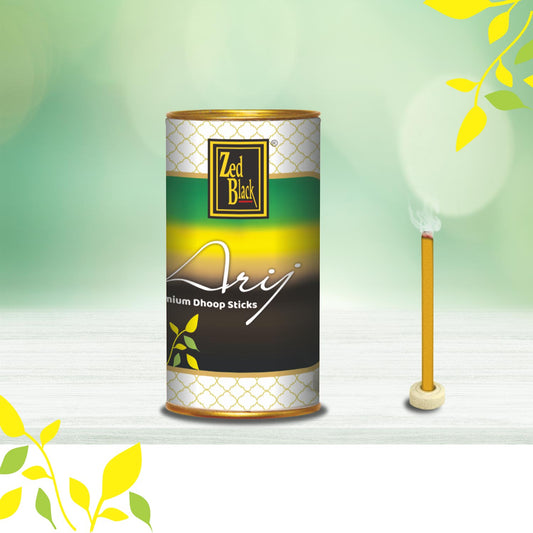


From ancient temples to quiet modern living rooms, the soft curl of fragrant smoke has been a companion to human rituals for thousands of years. Incense sticks hold a unique place across cultures, used in prayers, meditation and simply to fill a space with a pleasing aroma. But not all of them are the same. They come in a wide range of forms, scents and compositions, each carrying its own character and purpose.
If you have ever stood in front of a shelf full of options and wondered which one to pick, this guide is for you.
A Brief Look at Where It All Began
The use of incense sticks and resins traces back to ancient Egypt, India, China and the Middle East, where burning fragrant materials was believed to carry prayers to the heavens and ward off negative energies. In India especially, agarbatti has been woven into daily rituals for centuries - a tradition that continues to this day in homes, temples and meditation spaces.
Over time, this practice spread across the world, evolving in form while holding on to its essence. Today, what started as a spiritual custom has become a popular part of everyday living.
Types of Incense Sticks You Should Know
1. Black and White Incense Sticks
Black and white incense sticks are the most widely used everyday format across Indian households. The difference lies in their composition - black sticks carry a darker, stronger-fragrance coating that delivers a bold and immediate fragrance, while white sticks have a lighter coating that releases a softer, more subtle aroma.
Both varieties cover a broad range of fragrances - rose, jasmine, sandalwood and mogra among the most loved, making them the most accessible incense sticks for everyday use.
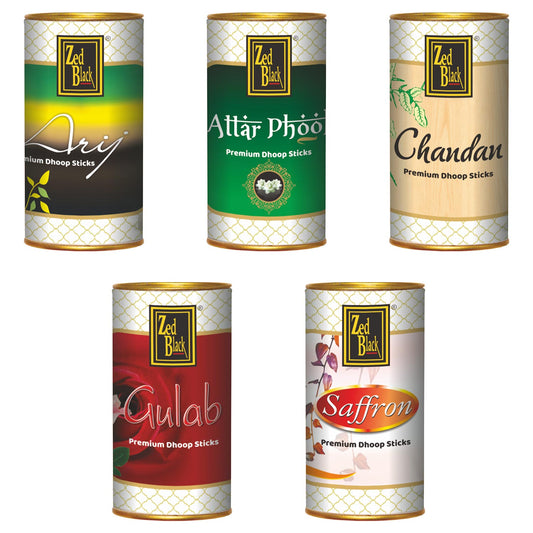
2. Dhoop - Wet Dhoop Batti
Wet dhoop batti is a softer, moisture-rich form of incense that releases fragrance slowly and steadily. Its thick, immersive aroma builds gradually, making it well-suited for larger spaces and longer rituals.
What makes wet dhoop batti truly distinctive is its moldable form - shaped by hand before every burn, it invites a quiet moment of intention before the ritual even begins, making each experience feel personal and purposeful.
Deeply rooted in Indian temple culture, people have long associated wet dhoop batti with purification and sacred atmospheres - a tradition that continues in homes and religious spaces to this day.
3. Dhoop Sticks - Dry and Thick
Dry dhoop sticks are a solid, bambooless column of compressed aromatic material that burns slowly and evenly. With no wooden core inside, every part of the stick contributes directly to the fragrance, making the fragrance purer and more concentrated.
These incense sticks are particularly favoured for meditation, longer rituals and outdoor or semi-open spaces where fragrance needs to carry further.
4. Dhoop Cones
Dhoop cones are shaped to burn from the tip downward, releasing a concentrated and directional fragrance in a shorter burn time. Their compact format makes them a practical choice for smaller spaces where a focused aromatic experience is preferred.
Beyond fragrance, many people find the visual of a softly glowing, smoking cone an experience in itself - making dhoop cones both a sensory and aesthetic choice.
5. Bambooless Incense Sticks (Bambooless Agarbatti)
Bambooless incense sticks are crafted entirely from aromatic material, with no wooden core running through them. This distinct format ensures that every part of the stick contributes directly to the fragrance, delivering a rich and concentrated aromatic experience from the very first burn to the last.
Available across a wide range of fragrance profiles, bambooless incense sticks are a preferred choice for those who seek a purer and more immersive aromatic experience from start to finish.
6. Sambrani Sticks
Sambrani, derived from benzoin resin, has been deeply woven into Indian cultural practices for centuries. Sambrani sticks bring this ancient tradition into a convenient everyday format - warm, resinous, and deeply grounding in fragrance.
Traditionally associated with cleansing a space and creating a composed atmosphere, these incense sticks carry a cultural and aromatic significance that few other formats can match. Whether used during morning prayers or quiet evenings, sambrani sticks remain a timeless ritual staple.

What Makes a Good Incense Stick?
Not every stick that fills a room with smoke qualifies as a quality product. Here is what to look for:
-
Even burn: A well-made stick burns steadily from tip to base without going out midway or leaving large amounts of unburnt residue.
-
Balanced scent throw: The fragrance should be noticeable without being overwhelming - a quality stick diffuses scent evenly across a space.
-
Ash quality: Fine, light ash that falls neatly is generally a sign of a well-composed stick.
-
Longevity: Good sticks hold their fragrance through the entire burn, not just the first few minutes.
-
Sillage (Scent Trail): Even after the incense stick has finished burning, a gentle trace of its fragrance should remain in the space - a scent that disappears instantly suggests a shallow aromatic profile.
Brands that have spent decades understanding these qualities tend to reflect them in every stick they craft. Zed Black is one such name that has grown from a deep-rooted passion for fragrance into one of the most recognised incense brands in India, where each stick is a quiet testament to what thoughtful blending and years of mastery can produce.
How Different Spaces Call for Different Scents
Choosing the right type comes down to where and how you plan to use it:
-
Meditation and prayer spaces tend to benefit from sandalwood, frankincense or resin-based aroma fragrances that many people associate with depth and stillness.
-
Living rooms and common areas are well-suited to floral or light blended varieties that feel welcoming without being intrusive.
-
Bedrooms and personal spaces often pair well with lavender, Mogra or soft herbal aromas that people traditionally connect with restful evenings.
-
Larger outdoor or semi-open spaces are where dhoop sticks and stronger masala varieties shine, as their fragrance carries more effectively in open air.
A Tradition That Continues to Evolve
The world of incense sticks is far broader than most people initially realize. From the humble masala agarbatti rolled in small artisan workshops to specialty resin blends inspired by ancient traditions, there is a version suited to nearly every preference and purpose.
What has kept this practice alive across millennia is simple - fragrance has a quiet but profound way of shaping how a space feels. Whether you light a stick as part of a morning ritual, during a moment of reflection or simply to freshen your surroundings, the experience connects you to something much older than you might expect.
Exploring the different types is part of the pleasure. Start with a fragrance that feels familiar, and let curiosity take it from there.